The concept that boys and girls learn differently is not new. Often, what a student naturally enjoys or is inclined toward will determine his or her success in various school subjects; but what if today’s classroom and curriculum structure catered however unintentionally to one gender more than the other? Many researchers say this is now the case, with boys facing an upward struggle from primary school on.
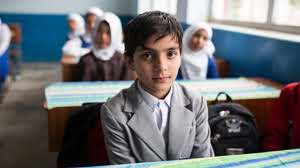
For many boys, co-educational public schools can be uncomfortable, unfriendly, unproductive places. Teaching styles and disciplinary habits are often not suited to the average boy and may “lock him into a terrible cycle of punishment and bad behaviour,” writes Dr. William Pollack, a professor at Harvard Medical School and author of Real Boys: Rescuing our Sons from the Myths of Boyhood. In learning environments biased against their strengths, boys may become turned off or frustrated and may attempt to have their needs met by seeking negative attention. This rebellion completes the circle of failure, Pollack argues, with many boys labelled as troublemakers or diagnosed with hyperactivity.
If study method is right, schools may need to upgrade many traditional teaching methods; but what about the girls?Girls’ education has been a major focus for researchers since the early 1970s . In 1992, the American Association of University Women published a report called “How Schools Shortchange Girls.” The report’s claim of a “girl crisis” was widely publicized, the Ms. Foundation declared a “Take our Daughters to Work Day” and the U.S. Congress passed the $360-million Gender Equity in Education Act. More recently, well-publicized studies and books – like 1995’s Reviving Ophelia by Mary Pipher – have argued that school systems put girls at a disadvantage.
However, the latest statistics indicate boys are in greater danger of failing, not girls. In 2001, the Toronto District School Board reported that 10 per cent more girls than boys achieved Level 3 or 4 (4 being the highest) in standardized reading and writing tests in Grades 3 and 6; and girls were holding their own in math, too. In Alberta today, boys maintain a slight edge in math and science but lag far behind girls in language arts. Other provinces report similar gaps.
A recent University of Chicago study, combining the results of six major surveys on educational achievement spanning 30 years and involving thousands of children, also indicates a similar “gender gap” in education – with boys falling to the bottom of the heap. The study reveals that girls, due to a concerted effort, have made steady gains in math and science while outperforming boys in reading and writing.
According to an international study by the Organization for Economic Co-operation and Development, and Unesco, the problem of boys’ underachievement in literacy is worldwide. The 2003 study suggests that girls out-performed boys in reading at the age of 15 in all 43 countries that participated in the study. Boys were ahead in math and, when it came to science, there was some evidence of a gender gap. In almost all of the countries involved, girls had higher expectations when it came to job prospects and were more likely to see themselves as white-collar workers than boys.
Currently the sixth most populous country in the world with 212 million people Pakistan is characterized by one of the highest population growth rates worldwide outside of Africa. Even though the roughly 2 percent rate is now slowing, the country’s population is estimated to reach 403 million by 2050 (UN median range projection There are more young people in Pakistan today than at any point in its history, and it has one of the world’s largest youth populations with 64 percent of Pakistanis now under the age of 30. Consider that Karachi is projected to become the third-largest city in the world with close to 32 million people by the middle of the century.
 Describe nature